 PassportPhotoSizes
Passport Photos for Babies and Children
By PassportPhotoSizes Editorial · Reviewed · 3 min read
Every country relaxes some requirements for infants and none of them relaxes the crop. Which means the two hard parts of a child's photo are the two nobody expects.
What is relaxed
For infants, generally under one year:
- Eyes may be closed. Accepted by the US, UK, Canada and most others for babies. Open is still preferred and worth trying for.
- Expression is not enforced. A neutral expression is required of adults; a baby is allowed to look like a baby.
- Head position has some tolerance for infants who cannot hold their head steady.
- The UK does not require children under six to look directly at the camera or hold a neutral expression, and does not require under-ones to have their eyes open.
What is not relaxed
- The background. Plain, correct shade, no shadows. Exactly as for an adult.
- No other person visible. Not a hand, not a finger, not an arm, not a shoulder, not a car seat strap. This is the requirement that fails most baby photos.
- The frame size and head height. Unchanged. A baby's head must occupy the same proportion of the frame as an adult's, which is the second most common failure.
- No dummy, toy, or hand in the mouth.
- Nothing over the head — no hats, no hair bows, no headbands.
The technique that works
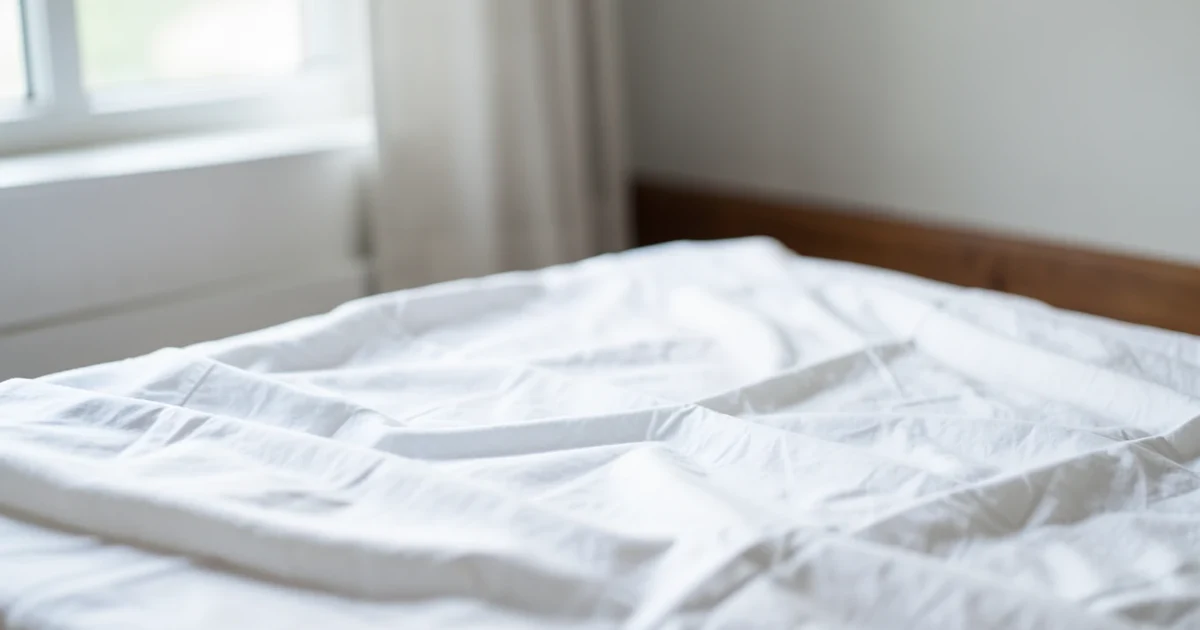
Lay the baby on their back on a plain white sheet, and photograph from directly above.
This solves the whole problem at once: the sheet is the background, nobody is holding the child, and there are no shadows because the light is coming from the room rather than past a person.
- Pull the sheet completely flat. Creases read as background texture and get rejected.
- Shoot straight down, not at an angle. A tilted camera distorts the face.
- Get the light from a window across the room rather than directly overhead.
- Check that no part of your own shadow falls into the frame.
For a child who can sit but not yet stand still, a car seat draped with a white sheet works, provided the sheet covers everything and no strap or edge is visible.
Older children
From roughly six upward the adult rules apply in full: eyes open, looking at the camera, neutral expression, mouth closed.
The practical difficulty shifts from staging to patience. Take many, choose afterwards, and expect a low hit rate — an assessor is looking at one photo, so the standard is whether the best of thirty passes rather than whether the average one does.
Glasses follow the adult rules too, which in the US means removing them entirely — glasses in passport photos.
The crop
This is where baby photos most often fail after everything else has gone right.
Head height is specified as a proportion of the frame, and a baby photographed from above at a comfortable distance produces a head far too small in the frame. It has to be cropped in substantially, which is fine as long as the original has enough resolution — another reason to shoot at full quality rather than sending a screenshot.
The measurement and the ranges are in head height, and the passport photo tool crops to the exact specification with the guides overlaid, for whichever country you pick.
Validity
Children's passports are issued for shorter periods than adults' — five years in the US for under-16s and in the UK, and similar elsewhere — precisely because appearance changes so quickly.
That also means a photo must be recent. Six months is the general rule, and for a baby the practical standard is stricter: a photo that no longer resembles the child will be questioned regardless of its date. The full set of reasons applications come back is in why passport photos get rejected.
Countries referenced
Keep reading
- Can You Smile in a Passport Photo?A neutral expression with the mouth closed is required almost everywhere, and the reason is measurement rather than solemnity.
- Why Passport Photos Get Rejected — and How to Avoid ItWrong size, wrong head height, wrong background, glasses, shadows. The eight reasons applications come back, and what each one actually requires.
- Visa Photos Are Not Passport PhotosThe same country often specifies a different size for a visa than for its own passport, and using the wrong one is a common and avoidable rejection.