 PassportPhotoSizes
Head Height: Why a Correctly Sized Photo Still Fails
By PassportPhotoSizes Editorial · Reviewed · 3 min read
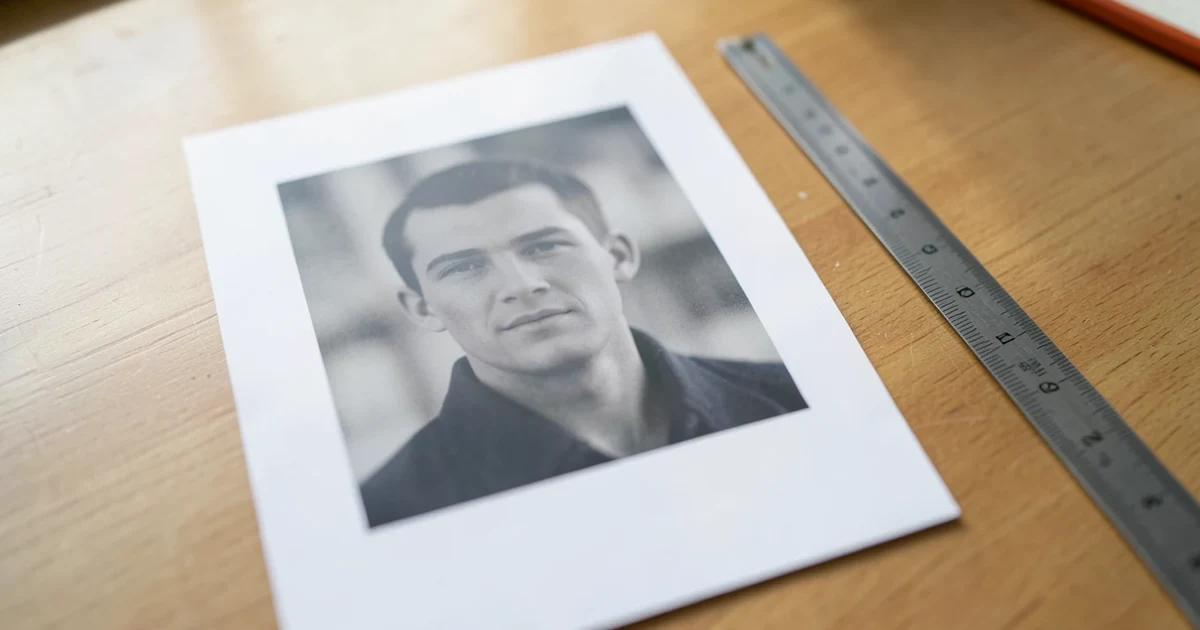
Frame dimensions are the easy half. They are a single number, published everywhere, and any photo editor hits them exactly.
Head height is the other half, and it is where correctly sized photos fail. It is specified as a range in millimetres against a print size, which nobody can judge by eye, and it is the measurement biometric systems depend on.
What is being measured
From the top of the head to the bottom of the chin.
Three clarifications, because each one produces a common error:
- The top of the head means the top of the hair, not the skull and not the hairline. Voluminous hair counts, which is why the same person can pass and fail on the same day.
- The bottom of the chin, not the neck and not the shoulders.
- It is a vertical measurement, so a tilted head measures short.
The specifications
| Country | Photo size | Head height | As a share of frame |
|---|---|---|---|
| United States | 51 × 51 mm | 25–35 mm | 50–69% |
| United Kingdom | 35 × 45 mm | 29–34 mm | 64–76% |
| Schengen area | 35 × 45 mm | 32–36 mm | 71–80% |
| Canada | 50 × 70 mm | 31–36 mm | 44–51% |
| Australia | 35 × 45 mm | 32–36 mm | 71–80% |
| India | 51 × 51 mm | 25–35 mm | 50–69% |
Two things stand out from that table.
The US range is unusually wide — a full centimetre — which is why US photos rarely fail on head height and frequently fail on other things.
Canada's head fills less of the frame than anywhere else, because the photo itself is much taller. A US-style crop submitted to Canada is too tight, and this is a common error for people applying to both.
The other measurements that come with it
Eye line. Several countries specify where the eyes must sit vertically. The US wants them between 28 and 35 mm from the bottom of the photo. Getting head height right and eye position wrong is possible if the head is positioned too low in an otherwise correct crop.
Clearance above the head. There must be visible space between the top of the hair and the top edge. Cropping tight to the head is a rejection even when the head height number is correct — this is the single most common consequence of cropping by eye.
Centring. The head horizontally centred, and the face square to the camera.
Why the range exists at all
Because face recognition measures distances between features, and those measurements are only comparable if faces are captured at a consistent scale. A head that fills too little of the frame carries too few pixels across the eyes; too much and the crop loses the head shape.
ICAO Document 9303 sets the international standard that most of these national rules derive from, which is why the numbers cluster so closely — 32 to 36 mm inside a 45 mm frame turns up in a great many countries independently.
Getting it right
Measuring a printed photo with a ruler works and is worth doing once, to calibrate your eye.
For the crop itself, the passport photo tool overlays the head-height guides for the country you select and crops to the exact frame size, which removes the two measurements that are hardest to judge. It runs in the browser and nothing is uploaded.
Then confirm against your own country's specification, since the numbers above are a sample of thirty: passport photo size by country.
The order to work in
- Take the photograph properly — distance, lighting, plain background, neutral expression. That is taking your own passport photo.
- Crop to the frame size for the destination country.
- Check head height within that crop, and adjust the crop rather than the photo.
- Check clearance above the head.
- Print at the correct physical size, because a correctly proportioned image printed at the wrong scale fails every measurement at once.
Most rejections trace back to step three or step five. The full list of what comes back and why is in why passport photos get rejected.
Countries referenced
Keep reading
- Why Passport Photos Get Rejected — and How to Avoid ItWrong size, wrong head height, wrong background, glasses, shadows. The eight reasons applications come back, and what each one actually requires.
- Can You Take Your Own Passport Photo at Home?Yes, in almost every country. Five specific things catch people out, and none of them is the camera — a phone has been good enough for a decade.