 PassportPhotoSizes
Glasses in Passport Photos: Banned in the US, Conditional Elsewhere
By PassportPhotoSizes Editorial · Reviewed · 3 min read
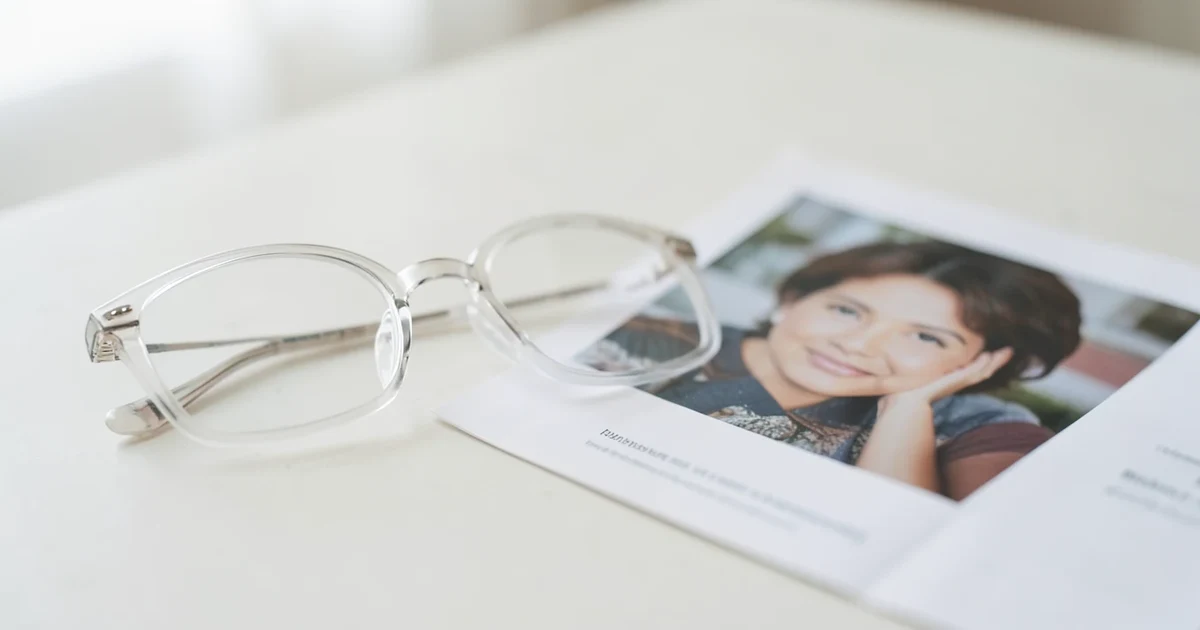
The rules diverged in 2016 and a great many people still act on the old ones.
The United States: no
The State Department prohibited glasses in US passport photos in November 2016, and the ban is total. Not "if there is no glare" — not at all.
The reason given was practical: glare and frame obstruction were causing a large share of rejections and repeat submissions, and removing glasses eliminated the category.
The only exception is a documented medical reason, which requires a signed statement from a medical professional submitted with the application. Recent eye surgery is the usual case. Simply needing glasses to see is not one, because the photo does not require you to see.
Most other countries: yes, with conditions
The UK, Schengen countries, Canada, Australia and most others allow glasses. The conditions are consistent and each of them fails photos regularly:
- Both eyes clearly visible. No frame across any part of the eye, no thick frames, no rim crossing the pupil.
- No glare or reflection on the lenses. This is the one that fails most photos.
- No tinted lenses. Photochromic lenses that have darkened outdoors count as tinted, which surprises people who took the photo in daylight.
- Frames not obscuring the eyes, including heavy top bars and thick temple arms at the side.
Some countries have moved further. Several now recommend removing glasses even where they are permitted, and a few have made it a requirement for biometric enrolment.
Check yours rather than assuming: passport photo size by country.
Avoiding glare, if you are keeping them on
Glare is a geometry problem rather than a lighting-strength problem. Light reflects off the lens at the same angle it hits it, so the fix is changing angles.
- Move the light source higher and off to the side. Directly in front of the face is the worst possible position.
- Tilt the glasses down very slightly — pushing the arms up a millimetre at the ear drops the lens angle and sends the reflection below the lens.
- Face a window rather than a lamp. A large soft source produces a broad faint reflection instead of a bright point.
- Never use the on-camera flash, which is exactly on-axis and guarantees a reflection.
- Take several and check each at full zoom before choosing.
Children and glasses
The same rules apply, with one practical difference: a child who wears glasses constantly may be harder to photograph without them, and the resulting photo may not resemble how they appear at a border.
That concern is real and it does not change the requirement. In the US the glasses come off regardless of age. Elsewhere the same conditions apply — no glare, no tint, eyes visible — and they are harder to satisfy on a small face at close range, because the lenses are smaller relative to the frames.
The simplest answer
Take it off.
No country requires glasses in the photo, none rejects a photo for their absence, and it removes an entire category of failure. If you are unsure of the rules for the country you are applying to, the photo without glasses is valid everywhere and the photo with them is not.
There is a mild argument on the other side — that a photo should resemble how you normally appear — but border systems compare facial geometry rather than overall impression, and glasses are removed at automated gates anyway.
The other things assessors check at the same time
Rejections cluster. A photo submitted with glare on the lenses is often also submitted with a shadow on the background or the head slightly too large, and the letter cites only the first.
Worth checking together:
- Background — shade and shadows
- Head height — the measurement most people never look up
- Expression — neutral, mouth closed, eyes open
The full list is in why passport photos get rejected, and the crop itself is what the passport photo tool handles, to the exact specification for the country you pick.
Countries referenced
Keep reading
- Can You Take Your Own Passport Photo at Home?Yes, in almost every country. Five specific things catch people out, and none of them is the camera — a phone has been good enough for a decade.
- Why Passport Photos Get Rejected — and How to Avoid ItWrong size, wrong head height, wrong background, glasses, shadows. The eight reasons applications come back, and what each one actually requires.
- Visa Photos Are Not Passport PhotosThe same country often specifies a different size for a visa than for its own passport, and using the wrong one is a common and avoidable rejection.